Publication

National Development Volunteers legal insights

    Policy Briefs & Reports

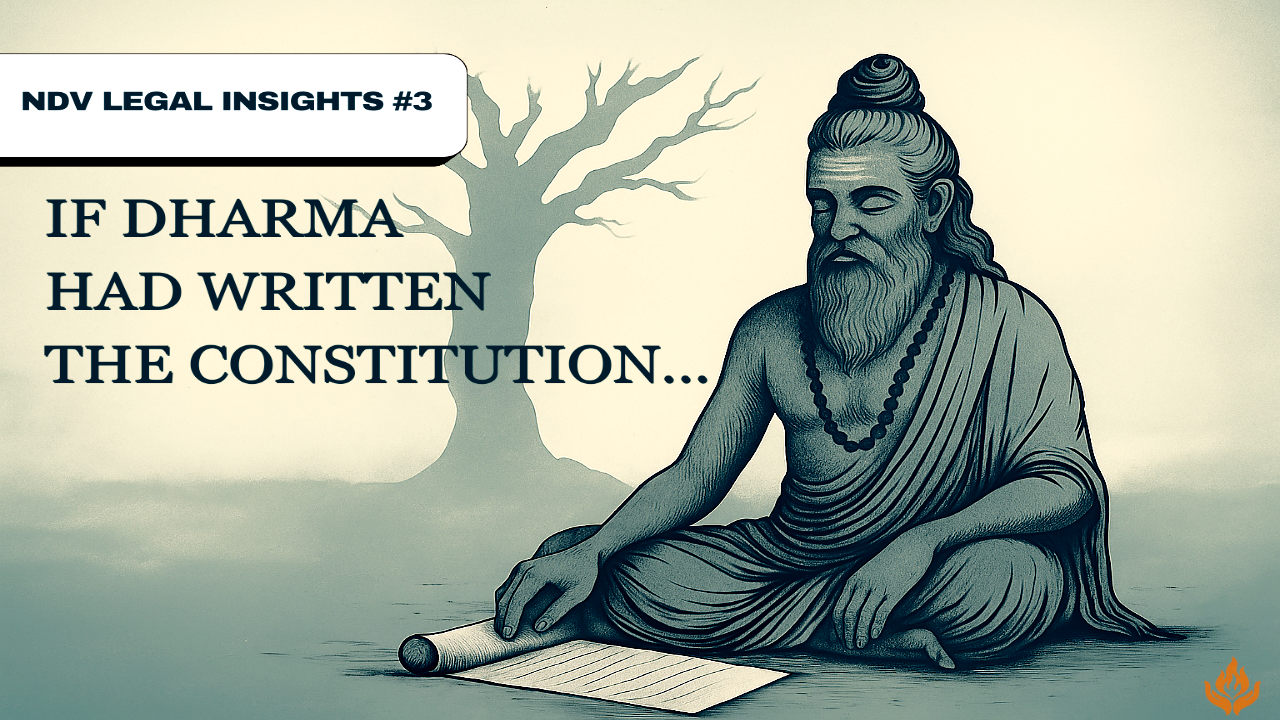
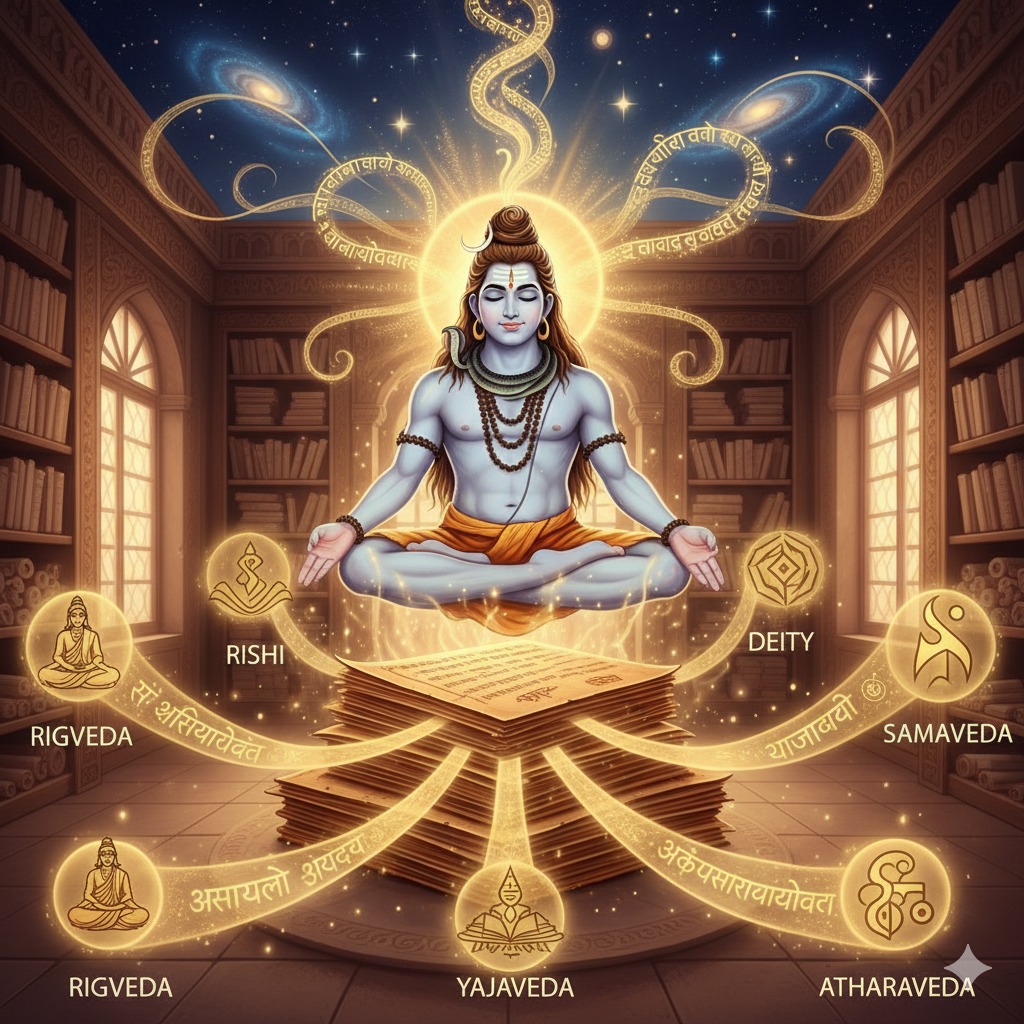
    Know your DharmaShastras

    The vast scope of Hindu religious texts is vast. A large portion of Hindu religious texts is not readily available today.

    The following are the reasons for this:

    1. Many of the foreign invaders who repeatedly invaded India were so barbaric and uncultured that they deliberately burned libraries and destroyed the texts.
    2. Ancient texts were written on palm or birch bark. Even among the texts that survived the invasions, many were destroyed by fire or by insects like termites.
    3. Some were destroyed by natural disasters, while others were destroyed by people themselves, either by throwing them into the fire or by burning them in a fire under the influence of some emotion.
    4. Even among the texts that survived all these disturbances, a large portion remains in people’s homes and is unknown to others. People are unable to publish them due to circumstances or are under the influence of some sentiment and do not want to publicize them among the people.

    Despite all this, a mere list of published and available works would create a voluminous volume. Therefore, we are providing a very brief list of the main works.

    Our Books

    The Ban on Cow Slaughter in India: A Constitutional, Civilizational, and Historical Study

    Published by: National Development Volunteers (NDV)
    The forthcoming NDV publication, “The Ban on Cow Slaughter in India: A Constitutional, Civilizational, and Historical Study,” is an exhaustive exploration of the legal, historical, and moral foundations of cow protection in Bharat.
    The book traces the sacred status of the Gaumata from Vedic and ancient India, through medieval jurisprudence, up to post-independence India, analyzing how civilizational values have been reflected, challenged, and codified in legal systems over time.

    Key features include:

    • Civilizational Foundations: Examination of why the Gaumata is revered in Dharmic texts and Indian culture, highlighting moral, ethical, ecological, and societal reasons for its protection.
    • Historical and Legal Evolution: Analysis of legislation from colonial India to post-1947 constitutional provisions, including Article 48 (Directive Principles), state-level laws, and judicial interpretation by the Supreme Court and High Courts.
    • Comparative Perspectives: A look at global experiences and approaches to animal protection, highlighting legal and ethical parallels where relevant.
    • Historical Incidents: Documentation of key events, such as the massacre of Gau Bhaktas on 7th November 1966, demonstrating the societal stakes and legal challenges surrounding cow protection.
    • Policy and Contemporary Debate: Assessment of current legal, ethical, and policy frameworks, including animal welfare, agricultural sustainability, and cultural rights.

    This book is designed to be a definitive reference for scholars, policymakers, legal practitioners, historians, and civil society interested in understanding how law and Dharma converge in the protection of Gau, and how these principles can guide contemporary governance and public policy.Publication Date: To be announced
      Publisher: National Development Volunteers (NDV)
      ISBN Application: In process

    A civilizational legal-policy think tank advancing Bharat’s legal, cultural & constitutional sovereignty.

    राष्ट्रीय विकास स्वयंसेवक
    (Rashtriya Vikas Swayamsevak)

    Get Involved

    Contact

    New Panvel, Navi Mumbai 410206

    © 2025 National Development Volunteers. All rights reserved.

    Our Vision

    NDV​‍​‌‍​‍‌ (National Development Volunteers) wants a Bharat where constitutional laws, public policies, and civilisational ethics are so interrelated that one cannot exist without the other. Our initiatives are based on the knowledge that Dharm is not just a religious concept, but it is a universal framework of justice, rights, and the common good.

    By rigorous research, doctrinal clarity, and legal scholarship that is reflective of the profundity of our heritage, we intend to re-civilise India with the confidence of her civilisation again. For us, national development is not limited to economic or administrative aspects; it also encompasses the intellectual, cultural, and spiritual. It involves bringing back the principles that have supported this civilisation for thousands of years.

    This recognition of Bharat as something beyond a political entity – a sacred geography, a shared civilisation, and a living continuum of ideas – is at the core of this ​‍​‌‍​‍‌dream.

    “A Hindu means a person who regards this land of Bharatvarsha, from the Indus to the seas, as his Father-land as well as his Holy-land, that is, the cradle land of his religion.”
     — Vinayak Damodar Savarkar